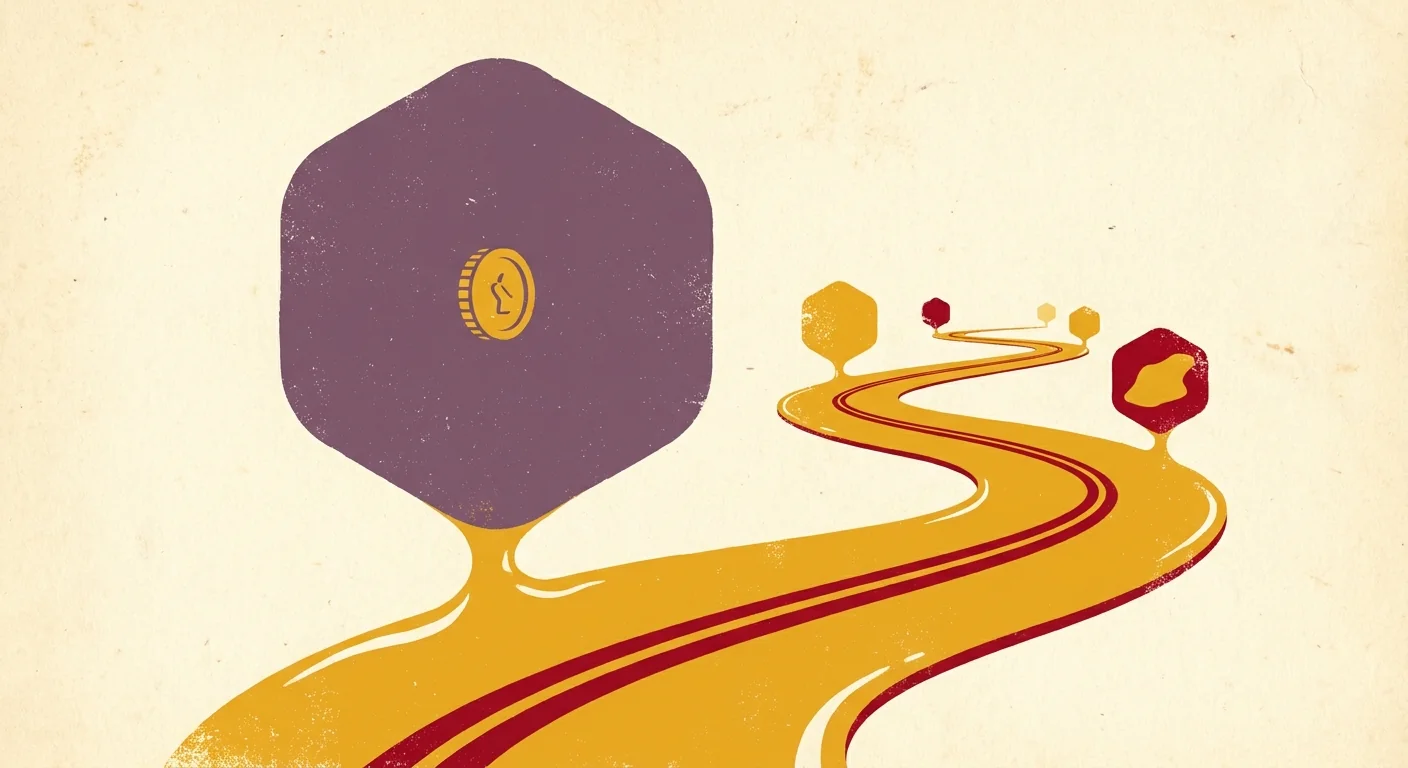
MATIC and Polygon are two words for two different things that got tangled together in nearly every guide. This page keeps them separate. When you know which one is a chain and which one is a coin, wallet setup gets a lot less confusing.
What Polygon is
Polygon is a network. Under that umbrella live several blockchains built to give Ethereum-style apps more speed and lower fees. The best-known one is called Polygon PoS — the proof-of-stake chain that most users interact with when they hear the word Polygon. There are others (zkEVM, Miden, plus older sidechains) but PoS is what MetaMask and most wallets connect to by default.
Because Polygon is built to be Ethereum-compatible, addresses look identical to Ethereum ones and standard tokens (ERC-20, ERC-721) work the same way. That is why the same MetaMask account holds both an Ethereum balance and a Polygon balance at the same address. To point MetaMask at the chain, see how to add polygon to MetaMask, step by step.
What MATIC is
MATIC is a coin. On Polygon PoS it is the native coin, meaning every transaction fee is paid in MATIC. Validators who secure the chain also stake MATIC. When you hold a positive MATIC balance on a Polygon address, you can move stablecoins, swap tokens, mint NFTs, and interact with any dApp on the chain, because you can pay the fees.
MATIC also exists as an ERC-20 token on Ethereum mainnet — the bridged version, wrapped for use inside Ethereum-only apps. That version is why some centralised exchanges let you withdraw MATIC over Ethereum instead of Polygon. Doing so costs a lot more in gas and confuses more wallets than it helps.
The MATIC to POL migration
Since 2024 the Polygon team has been renaming the token from MATIC to POL. The migration is a one-to-one swap on-chain: you can convert MATIC to POL through an official migration contract, and holders on centralised exchanges are converted automatically over time. Value does not change; only the ticker does.
For a while both names sit side by side in wallets, on exchanges, and in guides. If you see MATIC in one place and POL in another, they are the same asset. The migration is roughly what Ethereum's proof-of-stake merge was: a big label change with strong effects for developers and near-invisible effects for most holders.
Where people mix them up
The tangle costs beginners time in a few common spots.
| Question | What people mean | What they should ask |
|---|---|---|
| How do I add MATIC to MetaMask? | Usually: add the Polygon network | Add the Polygon network, then MATIC is the native coin on it |
| Why is my MATIC balance zero? | Wallet is on Ethereum, not Polygon | Switch MetaMask to Polygon Mainnet in the network dropdown |
| I sent MATIC but it never arrived | Sent on Ethereum, expected on Polygon (or vice versa) | Check the transaction on the explorer for the network used |
| Which do I need to buy first, MATIC or Polygon? | They are the same thing here | Buy a bit of MATIC/POL; you now hold the coin of the network |
Our page on adding MATIC to MetaMask pulls the two tasks (network vs token) apart in detail.
What you need to remember
Polygon is a place. MATIC (soon POL) is the coin that pays for staying in that place. Wallets that support Polygon show your balance on the Polygon screen. Wallets on Ethereum can hold a MATIC token, but that is a different beast and rarely what a beginner wants.
The clean shape:
- Add the Polygon network to your wallet once.
- Fund it with a bit of MATIC for gas — see matic polygon mainnet faucet for the small honest drips.
- Use the wallet as normal, paying fees in MATIC or POL depending on the day.
- Ignore any page insisting you must pick between MATIC and POL — the market treats them as one asset already.
Chain and coin in one line
Polygon is the chain. MATIC is the coin. POL is the same coin under a new name. Once those three sentences click, every Polygon-related guide gets much easier to read. Most of the noise around adding, sending, staking or claiming on Polygon comes from mixing up whose job is whose. Keep the two straight and the wallet does what you expect the first time.