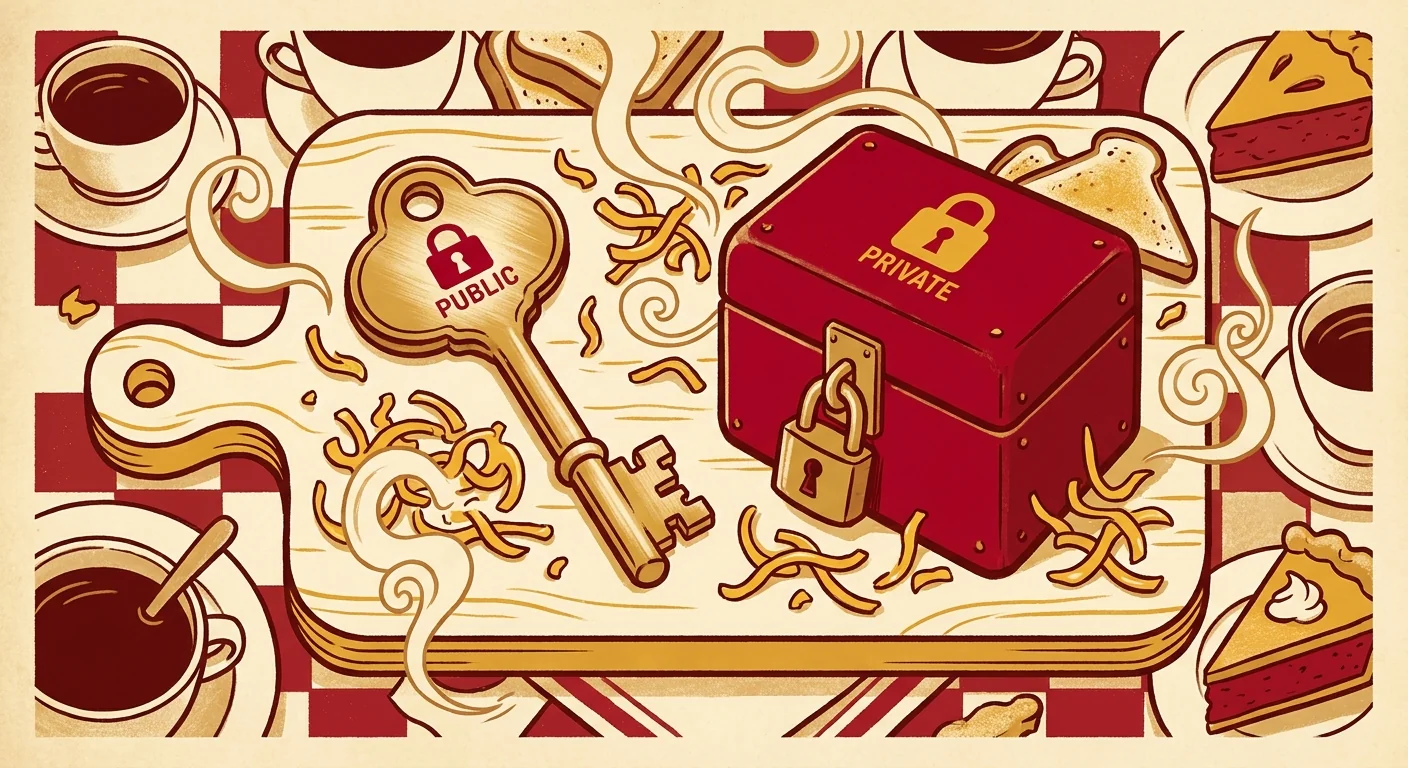
People sometimes ask about the "hot wallet vs cold wallet public key" difference and expect two different keys. There usually is not one. Both wallets can share the same public key and the same address. What differs is where the private key lives. This guide explains the split in plain English.
What a public key actually is
A crypto wallet has two related numbers: a private key (the secret) and a public key (the shareable one). Your public key is turned into an address, which is what you paste when someone wants to send you coins. The address is safe to share. Anyone with the address can send to it, and it does not let them take anything out.
Under the hood, wallets use elliptic-curve math to derive the public key from the private key. Signing a transaction proves you control the private key without revealing it. That is why the network can accept your transactions without you ever posting your secret. Our hot vs cold wallets guide has the deeper context.
Why hot and cold wallets usually share the same public key
If you restore a hardware wallet (cold) and a MetaMask install (hot) from the same seed phrase, they will show the same address. That is because the seed generates the same private key on both, and the same private key produces the same public key.
People sometimes think using a hardware wallet gives them a new address. It does not — unless they generate a fresh seed on the device. The address is the same in both places. The difference is the safety of where the private key is stored.
What actually differs, hot vs cold
| Property | Hot wallet | Cold wallet |
|---|---|---|
| Public key / address | Same as cold if same seed | Same as hot if same seed |
| Private key storage | On an internet-connected device | On offline hardware or paper |
| Signing takes place | Inside the phone or browser | Inside the hardware device |
| Ability to receive | Yes, anytime | Yes, anytime |
| Ability to send | Instantly with a click | Only when device is plugged in and unlocked |
Notice the last two rows. Receiving is always safe. Sending is where a hot wallet's convenience turns into risk if malware or a hostile site tricks a signature. Cold wallets add an extra step — you have to be physically present at the device — which stops most remote attacks.
Using the same address for both, safely
Some people share a single address between a hardware wallet and a phone wallet backed by the same seed. That is convenient but doubles the exposure of the private key. If the phone is compromised, the whole wallet is compromised — even though the hardware wallet also exists.
A safer pattern is to keep two separate seeds: one on a hardware wallet for savings, and a fresh, unrelated seed on a phone for daily use. The two wallets have different public keys and different addresses. If the phone falls to a scam, the hardware wallet is untouched. Our legit-airdrops guide encourages the same split for claim wallets.
Hot wallet vs cold wallet public key, in one sentence
To close on hot wallet vs cold wallet public key: the public key is the shareable half of the pair, and it is the same on both when the wallets share a seed. What changes is where the private key sits and what has to happen before it signs. Understanding that split lets you receive on any address without fear, decide when to plug in your hardware wallet, and keep your daily hot wallet limited to amounts you would be sad — but not sunk — to lose. Read our risk disclaimer before you move real value between wallets, and keep the habit of double-checking any address you paste — a wrong character is far more common than a broken key.