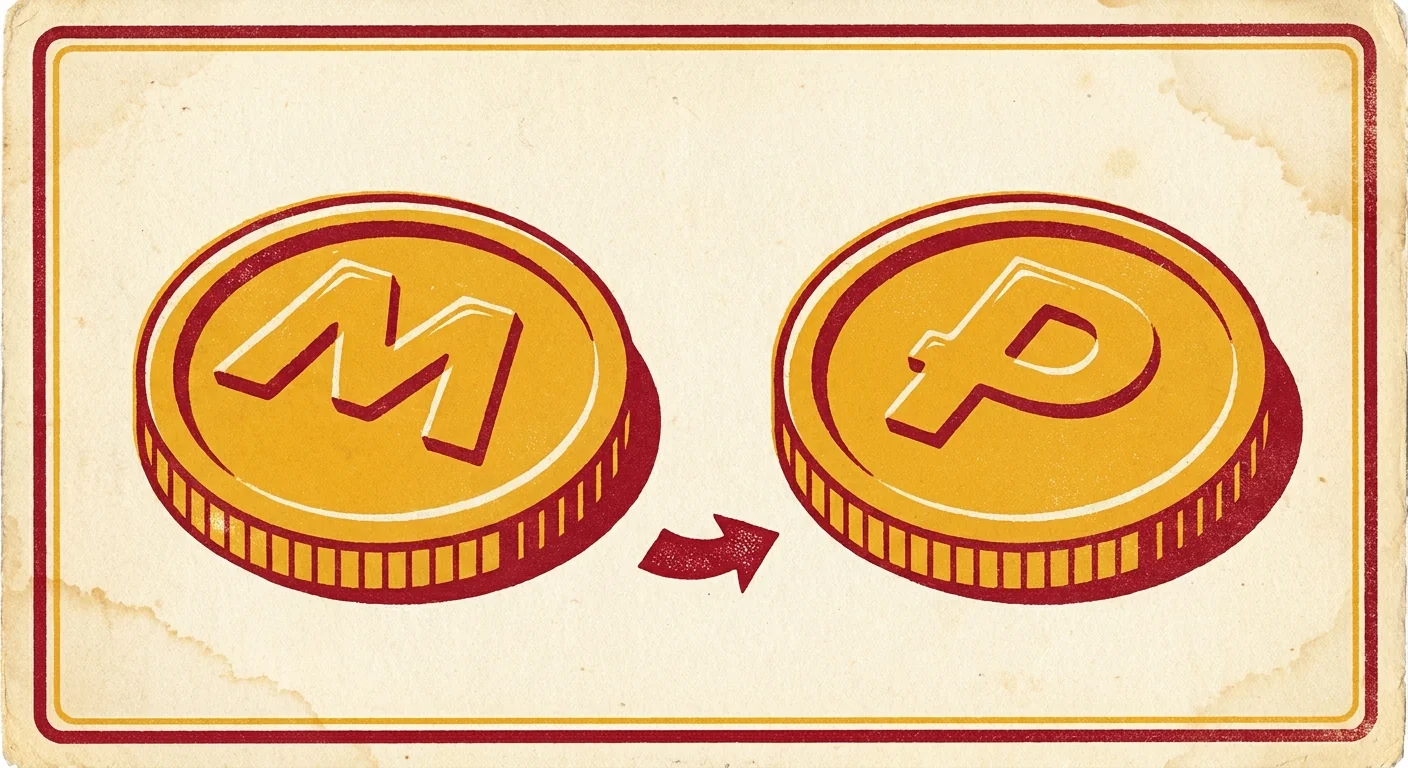
If you held MATIC and woke up one day to see POL instead, the swap you missed is the Polygon token rename. This page walks through what changed, what did not, and what to do if you still see the old ticker in your wallet.
What actually happened
In 2024 the Polygon team announced a migration from MATIC to POL. The move had two parts. First, a ticker rename — the token symbol on exchanges and wallets shifted from MATIC to POL. Second, a small technical upgrade that lets a single POL contract secure multiple Polygon chains in the future, not just Polygon PoS.
Value did not change. One MATIC became one POL. Balances stayed at their dollar equivalent through the swap. The market treated the two tickers as the same asset from day one.
Who had to do anything
Different holders had different work:
| Where you hold MATIC | What happens | What to do |
|---|---|---|
| On a centralised exchange | Exchange usually swaps automatically over a scheduled window | Nothing. Balance re-labels itself as POL. |
| Self-custody on Polygon PoS | Both tickers coexist for a while; you convert at your own pace | Use the official migration contract when convenient |
| Self-custody as ERC-20 MATIC on Ethereum | Bridge and swap through the migration contract on Ethereum | Follow the migration guide from Polygon's docs |
| Staked on the Polygon staking dashboard | Staked balances migrate to the new POL staking contract | Restake if the front-end asks; nothing changes economically |
Almost every big exchange handled the switch silently. Small ones and self-custody users had to click through the migration once.
Why Polygon did it
The reason is more technical than a rename usually is. Polygon has been building an ecosystem of chains — the PoS chain, zkEVM, Miden, and others. The old MATIC contract was tied to only the PoS chain. POL was designed to sit above all of them: one token that can secure many chains, one staking contract that can pay rewards from any of them, one migration flow that keeps balances consistent as new chains launch.
For an ordinary holder, none of that matters day to day. It matters if you plan to stake, run a validator, or use bridges that route through multiple Polygon chains at once.
How to swap if you still hold MATIC
The self-custody path is short:
- Open the official Polygon migration site linked from polygon.technology.
- Connect the wallet that holds MATIC. Verify the URL letter for letter.
- Choose the amount to migrate. Approve the token if the wallet asks (this only lets the migration contract touch that specific token, not everything you own).
- Confirm the swap. Gas is small. POL appears in the same address.
Never migrate through a third-party site you found in search results. The scam version of this flow is a fake migration page that asks for a permit or an approve on a stablecoin instead of MATIC. See airdrop scams for the wider family of drainer patterns.
What if you do nothing
You keep your MATIC. The old token contract does not vanish. Exchanges over time drop MATIC support and list only POL, and some services eventually stop pricing MATIC separately. But the on-chain balance sits there and can be migrated whenever you notice.
For most self-custody holders, migrating in the first year is convenient because dApps update their token lists to POL, and a wallet that still holds MATIC can look empty even when it is not.
The rename in one page
MATIC and POL are the same coin under two names. Exchanges handled the swap for their users automatically. Self-custody holders swap through the official migration contract at their own pace. Value did not change. The chain works the same for a normal user. Everything else in guides and news about the rename is either technical detail for developers or scam bait for people who assumed the swap was optional. Do the migration once when you get around to it and the story ends there.
For the wider setup context, our companion pages are MATIC and Polygon: one word, two different things and how to add polygon to MetaMask, step by step.