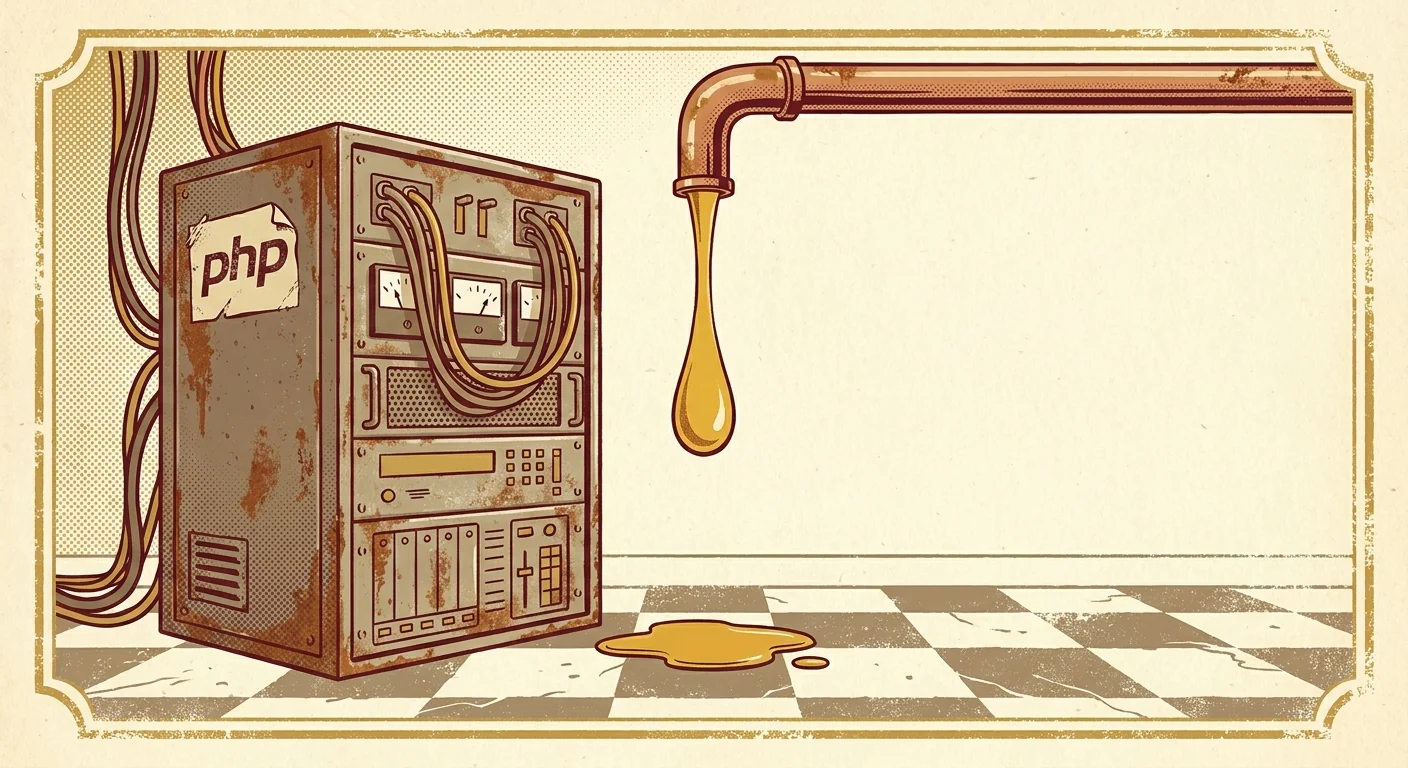
If you searched for a Polygon mainnet faucet in 2021, you found a lot of .php pages on shared hosting: matic-faucet.php, freematic.php, and a dozen variations. Most of them are gone now, and the ones that survived are worth remembering for what they got right and wrong. This is a short field guide to that era, written for anyone still bumping into cached results.
Why PHP pages were so common
PHP is cheap and easy. A hobbyist with twenty dollars and a weekend could spin up a page that accepted a wallet address, called a script to send a small amount of MATIC, and displayed a transaction link. Shared hosting cost pennies. Polygon fees were minute. The whole setup felt like giving away candy.
Polygon itself launched in early 2021 as a chain aimed at cheap DeFi. Fees were near zero, so a fresh wallet with no MATIC could not do the first swap. That fee gap was the whole reason the faucet ecosystem existed. Anyone could plug the gap for a while, so many did.
What those pages actually did
The honest ones did roughly this:
- Show a form with a wallet address field and a captcha.
- On submit, check the address is a valid Polygon address and has not claimed today.
- Call a server-side script that signs a small MATIC send from a hot wallet.
- Return the transaction hash to the visitor.
Amounts were tiny by design, usually 0.001 to 0.01 MATIC — cents at the time, sub-cents now. The reserves the operator loaded up ran out in days as thousands of new users piled in.
Most operators lost patience or money, then took the site down. A few pivoted to something worse.
Where the scams hid
The dishonest variant looked almost identical from the outside. The difference showed up on the second click.
| What the page did | Real intent | Common outcome |
|---|---|---|
| Asked you to sign a Web3 message to prove address ownership | Off-chain permit that gave the operator token access | Wallet drained on the next big deposit |
| Directed you to connect wallet before showing the form | Fingerprinting for targeted phishing | Later scam emails referencing your holdings |
| Insisted on a small MATIC deposit first, promised more back | Standard advance-fee fraud | Zero MATIC returned |
| Asked for the seed phrase to verify wallet | Direct theft | Full wallet loss |
Very few users needed the MATIC badly enough to accept these prompts, but the ones who did lost far more than the drip they were chasing. Our page on airdrop scams covers modern versions of the same shapes.
Why the model collapsed
Three things ended the PHP faucet era.
- Cost. Operators had to keep sending gas from their own funds. As Polygon usage grew, the drain outran donations.
- Abuse. Bots hammered every faucet, harvesting many tiny drips into scripted trading. Real users lost out on captchas that never passed.
- Alternatives. Wallets, bridges, and exchanges built in their own solutions — usually crediting a first-fee amount on a real deposit. That killed most of the demand.
The modern successor is a serverless faucet run by the network or a trusted community, protected by proof-of-personhood or per-address daily limits. It runs for years without falling over, because the drip is tiny and abuse is filtered out at the door.
If you still see a .php result in search
Cached Google results can serve you a 2021 PHP faucet page in 2026. If you land on one, three quick checks:
- Look at the date on the page. Anything from 2021 or 2022 is almost certainly dead or repurposed.
- Watch what the page asks for. If it wants a wallet connection, a signature, or a payment, close it.
- Fall back to the modern route: withdraw a small amount of MATIC from an exchange, or bridge stablecoins with a real bridge that credits a bit of gas.
For a walkthrough of the network setup the drip enables, see add polygon to MetaMask wallet, and for the tokens-on-wallet safety discussion see hot wallets vs cold wallets.
A small piece of crypto history
The .php faucet era ended not because Polygon got worse but because the ecosystem grew up around it. What used to need a scrappy hobbyist page is now baked into the bridge you use, the wallet you install, or the exchange you already trust. That is a good thing. It also means the scrappy pages that remain in search results are usually stale — sometimes harmless, sometimes traps. Treat them like a very old restaurant sign: nice to notice, no reason to walk in.